
.svg)
Where Architecture Meets Landscape
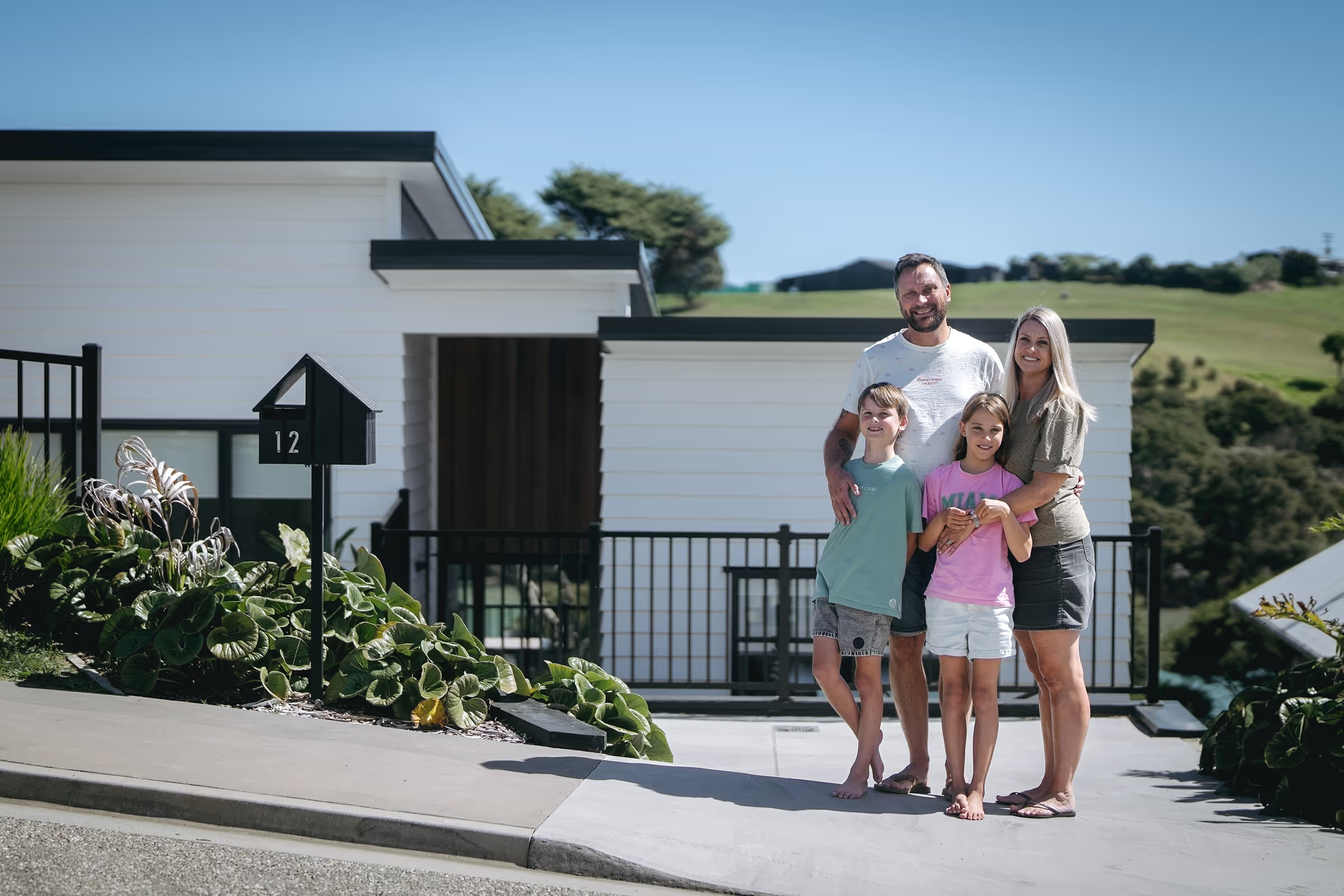
Some homes are designed around a floorplan. Others begin with a site. For local architect Francesca Francis of Rua Studios and her husband Tom Francis of TAF Electrical, this Rangitahi home began with a steep section and a desire to create something thoughtful, practical and connected to its surroundings. What followed was a hands-on project that challenged them as professionals, stretched their creativity and ultimately became a home shaped as much by the landscape as the architecture itself.
Video by Guy Mac
With a designer and an electrician in the family, taking on a house project together felt like a natural step. Rather than seeking out an easy site, the couple saw potential in a more challenging piece of land, drawn to the opportunity to create a home that responded carefully to both the terrain and the climate.
From the outset, the focus was about creating spaces that would genuinely work for everyday life in Raglan. Sunshine, shelter and outdoor connection became the guiding principles.
"A main feature of our house which was important to me was the south-facing section," says Francesca. "We wanted to maximise living on the north with protection, whilst maintaining views to the south."
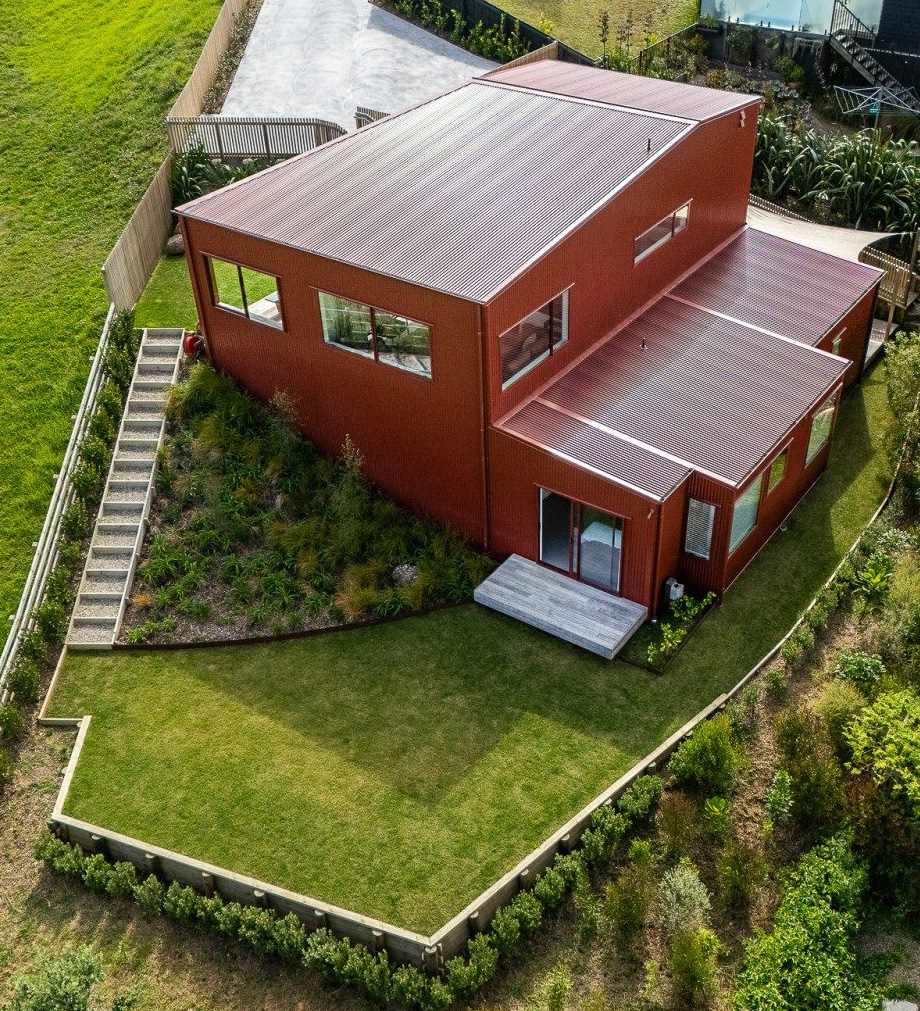
That approach runs counter to what many people might expect. While it can be tempting to orientate outdoor living spaces entirely around a view, Raglan's prevailing winds often tell a different story.
"A lot of people see the view and want to put a deck on that side," Francesca explains. "But naturally those spaces aren't very usable with the winds here."
Instead, the home has been carefully positioned to capture light and warmth while remaining sheltered from the elements. The result is a series of outdoor spaces that can be enjoyed throughout the day and across the seasons, rather than a single exposed deck which can only be used in perfect weather conditions.
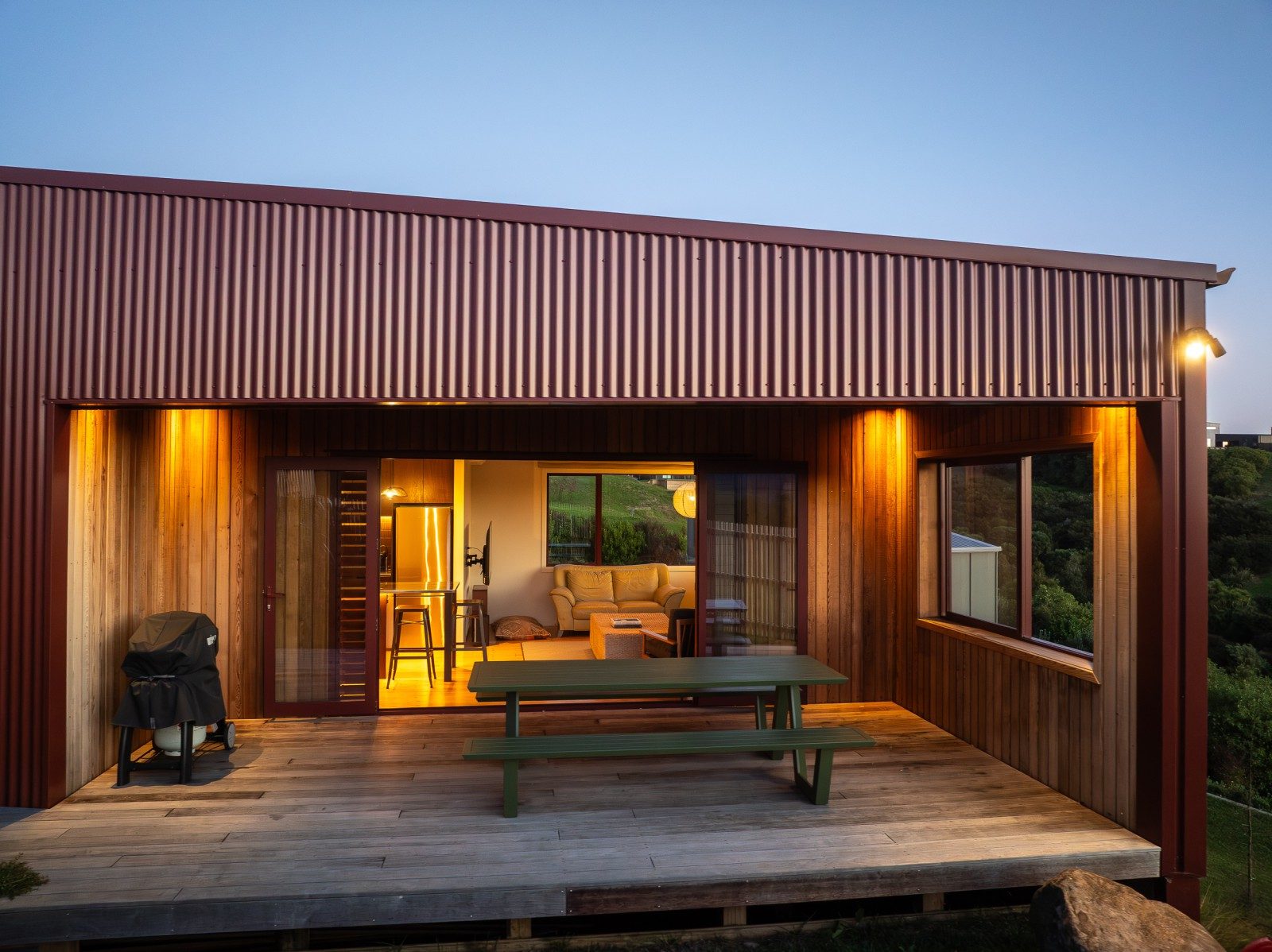
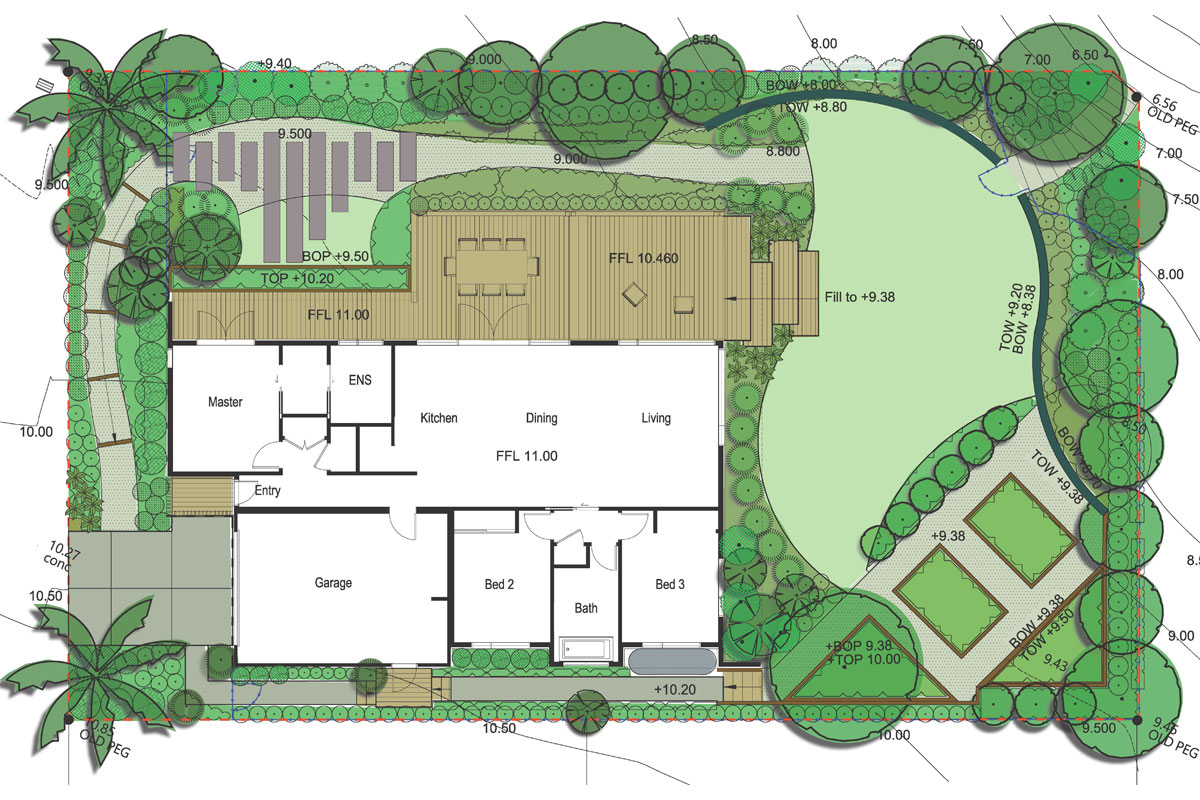
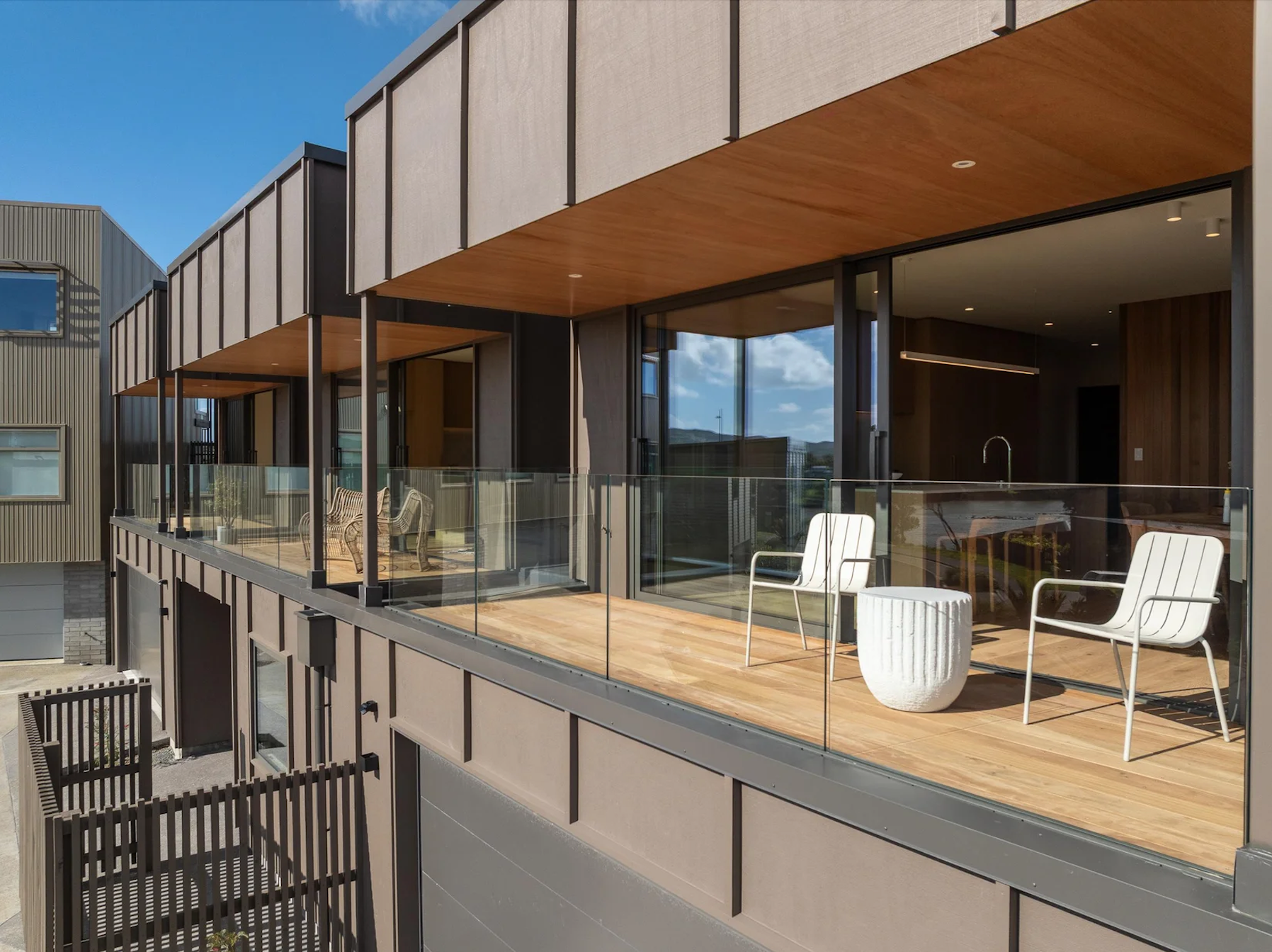
Inside, the layout reflects the same practical thinking. The upper level is centred around open-plan living, with a well-appointed kitchen positioned at the heart of the home. Large windows draw in natural light while framing views toward Mt Karioi, the harbour and the surrounding landscape. A covered outdoor living area extends directly from the main living spaces, creating a seamless connection between indoors and out.
Downstairs, three bedrooms provide a quieter retreat away from the social hub above. The arrangement works particularly well for families, allowing everyday routines to unfold comfortably while maintaining a sense of separation between living and sleeping spaces.
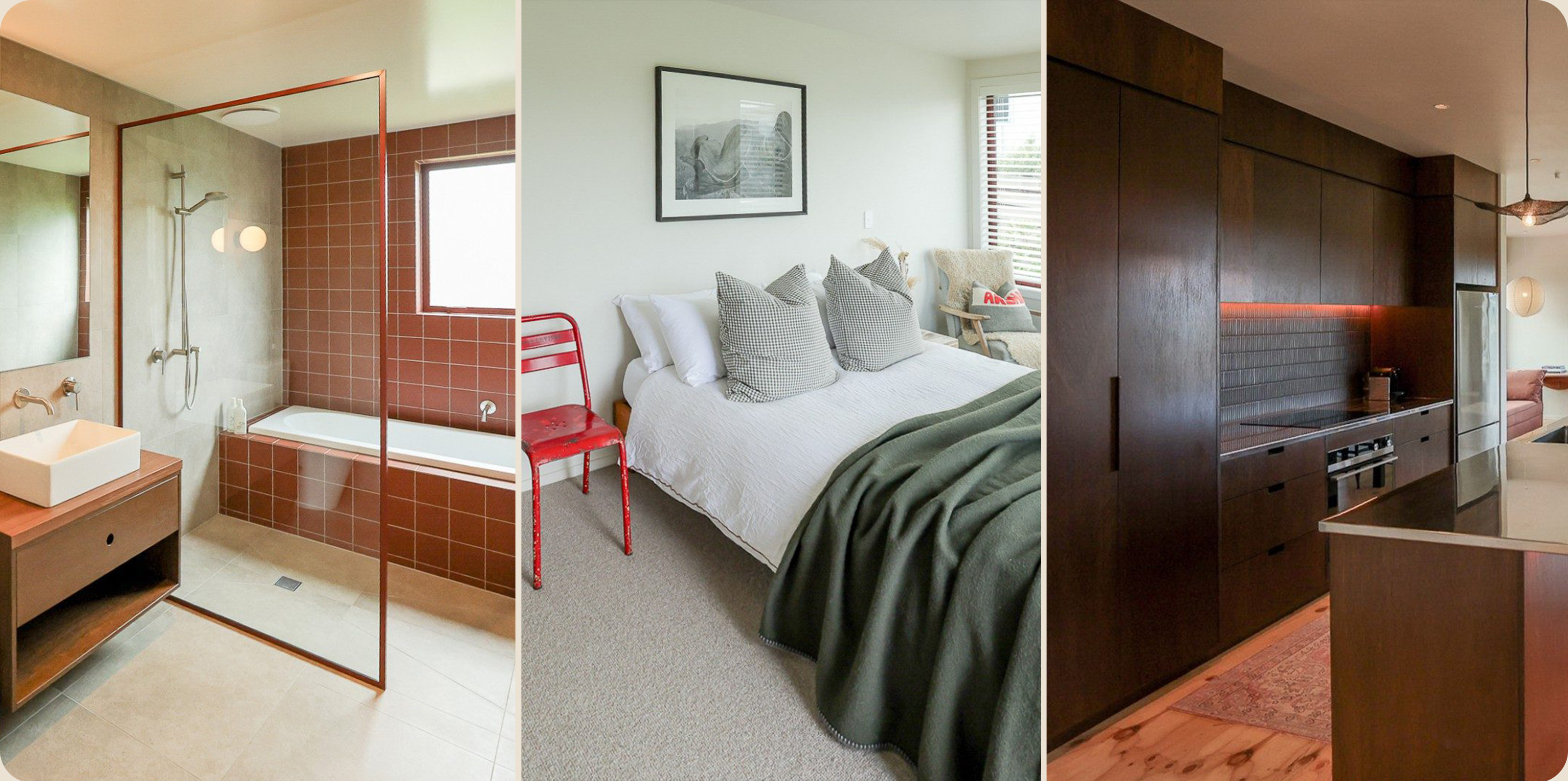
Throughout the home, thoughtful details contribute to its functionality. Natural ventilation, carefully considered storage, mood lighting and handcrafted light shades all add character without compromising practicality. It is a home that feels considered, not just in the big decisions, but in the small ones too.
As both architect and owner, Francesca had the freedom to explore ideas she may not always have the opportunity to pursue in client projects.
"It was definitely easier to be more bold with the design, material selection and colour," she says. "People are often keen, but find it easier to play it safe. The vision here was always for a red house and we made it happen."
That confidence is evident throughout the project. The distinctive red exterior sits comfortably amongst the surrounding landscape, creating a striking contrast to the greens of the native planting while still feeling grounded in its environment.
Yet while the architecture provides the framework, it is the landscape that arguably gives the home its soul.
From the beginning, Francesca and Tom saw the gardens as an extension of the design rather than something to be added later. Extensive native planting was used to create privacy from neighbouring properties, soften the home's edges and establish a stronger connection to the land.
What started as a rough plan evolved over countless hours of hands-on work. Tom spent much of that time shaping the site, operating machinery, moving earth and helping bring ideas to life as the gardens gradually developed around the home.
Today, the planting continues to mature, with every season adding another layer to the landscape.
"The different greens of the garden popping on an overcast day, or at dawn with the red cladding and copper light fittings, that's probably what we'll miss the most," Francesca says, when asked about moving on to their next project.
One decision that proved particularly valuable came later in the process. Rather than fully landscaping the lower part of the site, the couple chose to retain a generous lawn area. In doing so, they created a highly usable outdoor space that now feels integral to the home.
"It feels like an epic place for a young family," Francesca says.
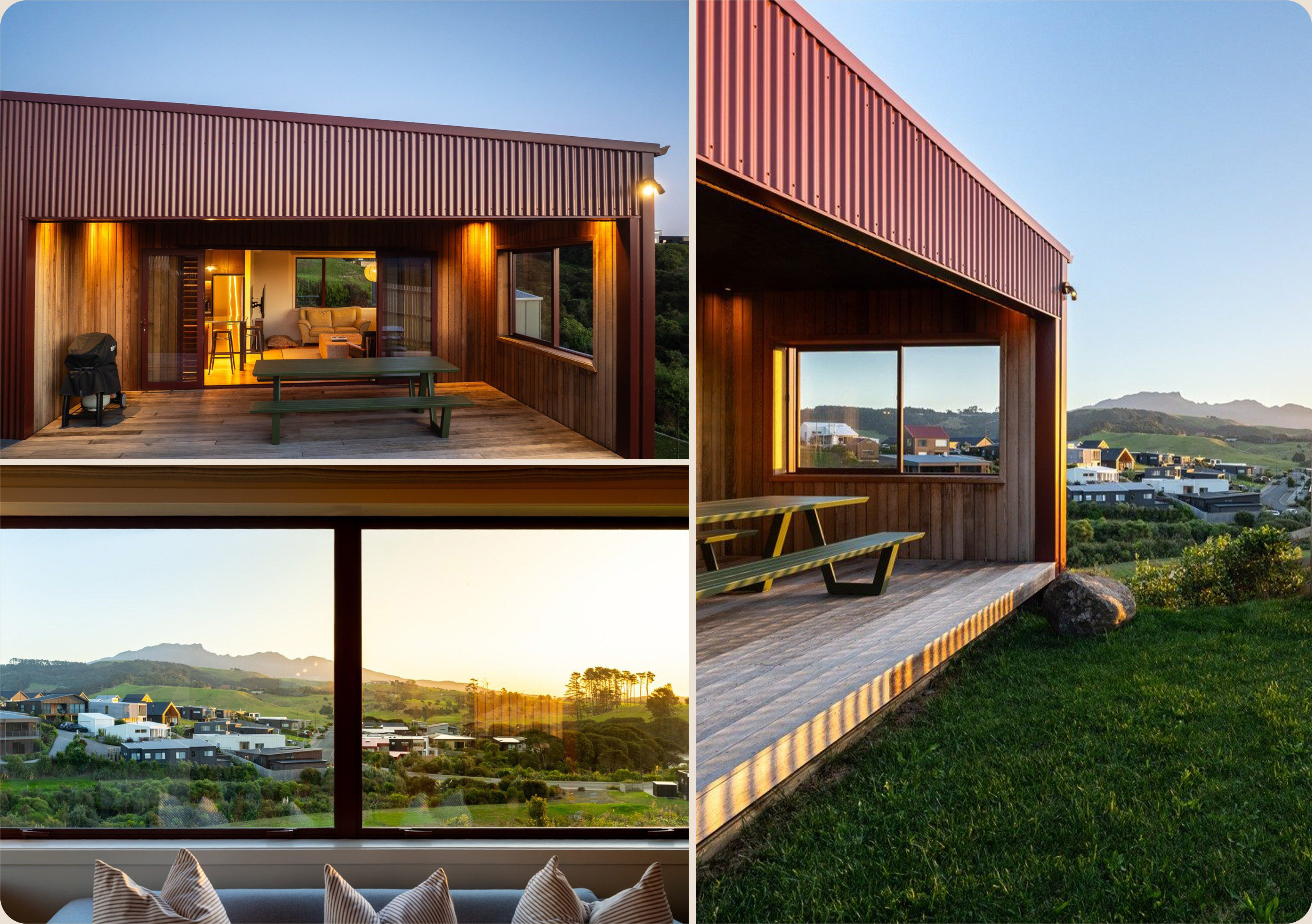
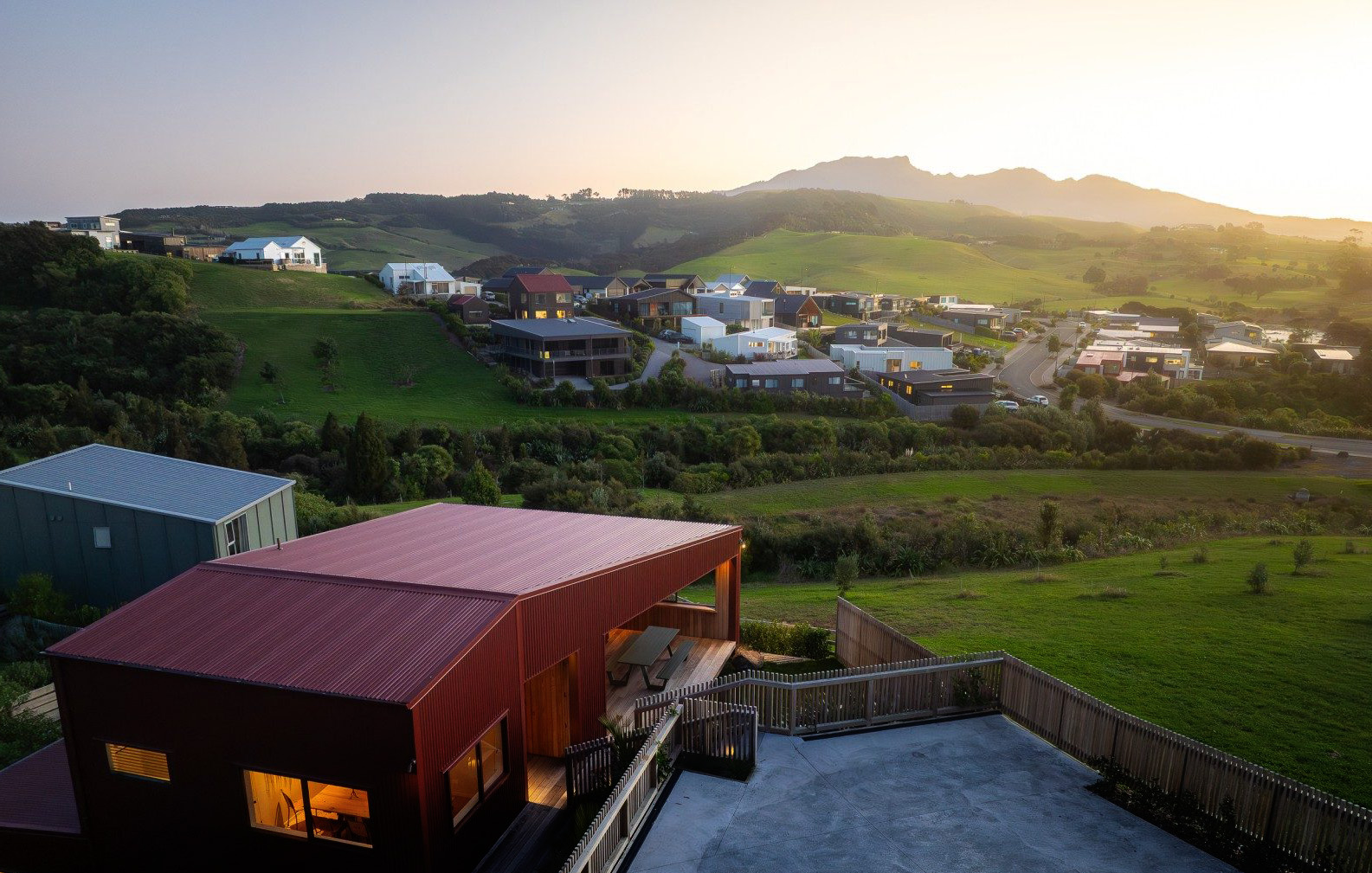
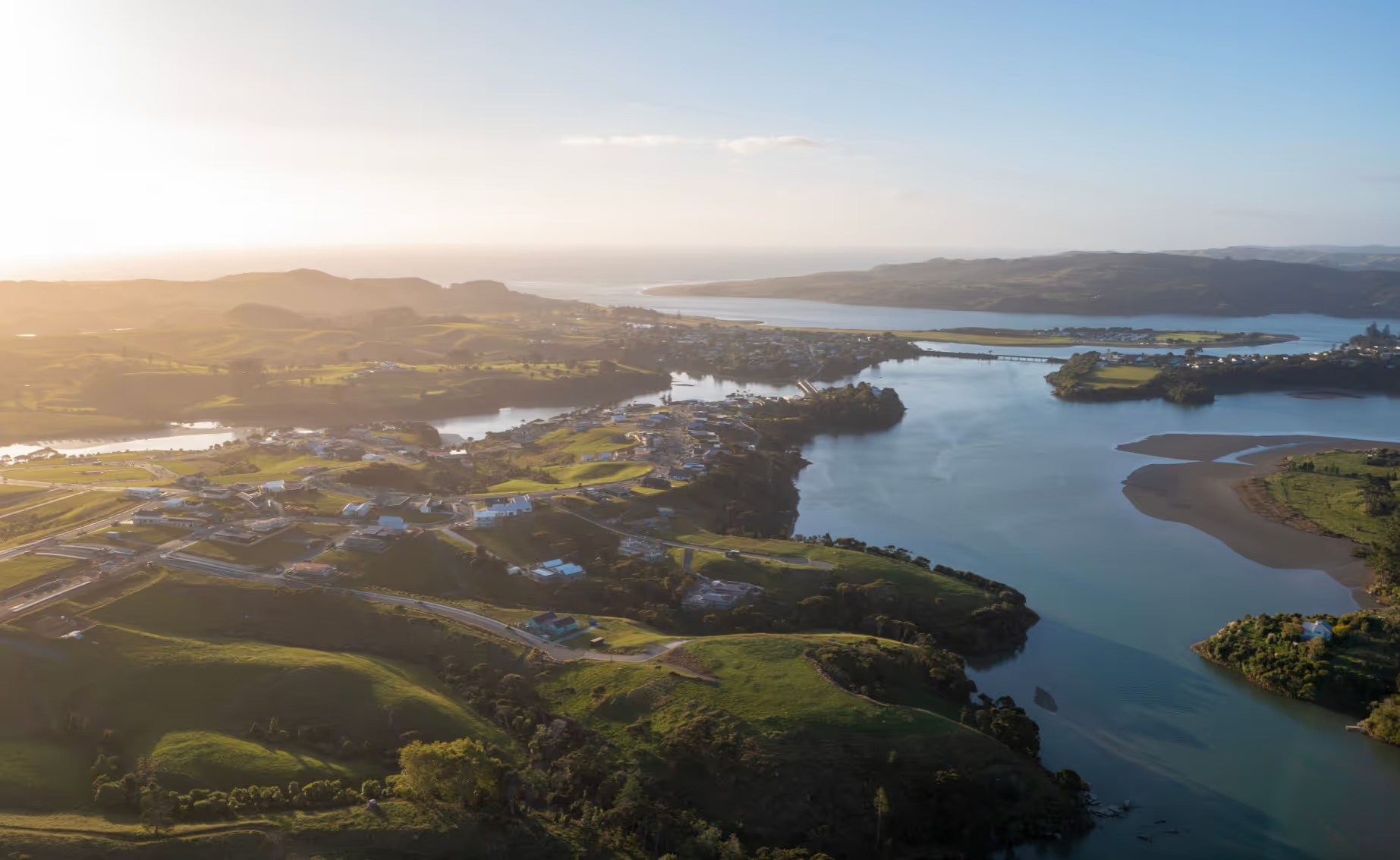
The section flows naturally toward the reserve and walkways below, creating an openness that extends well beyond the property boundaries. From the garden, there are views toward Mt Karioi, glimpses of the harbour and a sense of connection to the wider landscape that is increasingly rare.
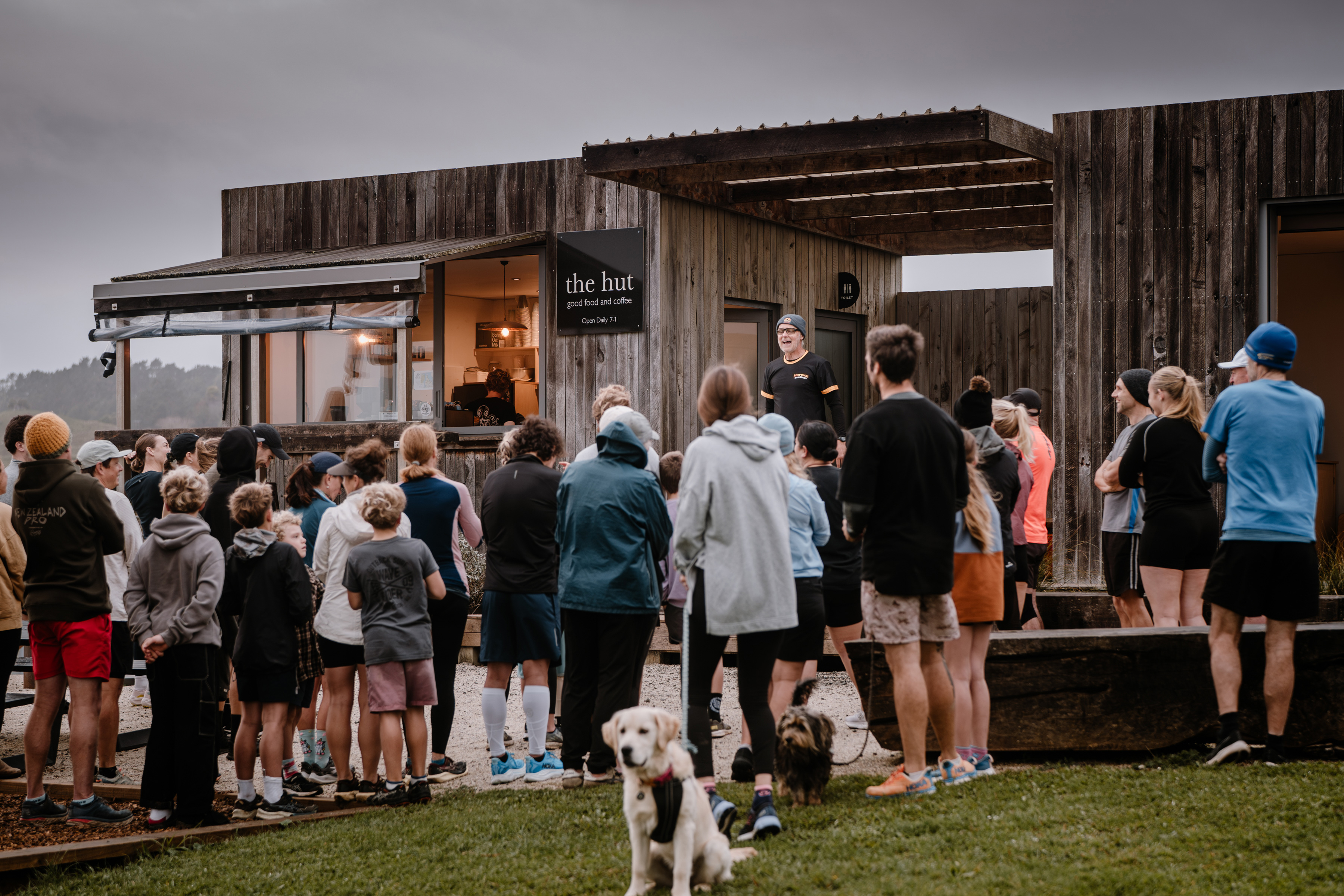
That relationship between home and surroundings is one of the aspects that makes Rangitahi unique. Walking tracks, green spaces and community amenities are all within easy reach, while The Hut café, tennis court and future community facilities sit just a short stroll away.
For Francesca, the project also provided valuable professional insight.
"There was a lot of learning," she reflects. "It was an awesome process to go through myself, to feel the time pressure and money stresses so that I can be fully aware of this when working with clients in future."
One lesson that stood out was just how difficult many people find it to visualise a project before it is built.
"Being in my profession, I think I took for granted my ability to visualise aspects in 3D before they came together."
Experiencing the process from the client's perspective has given her a deeper understanding of the challenges homeowners face and will undoubtedly influence her work moving forward.
The project also highlights the strength of local trades within the Raglan community. Built with the help of local contractors and craftspeople, the home is the product of many hands and many years of collective experience working in the area.
For future owners, that story is still unfolding. As the native planting establishes and the outdoor spaces become increasingly private and connected, the relationship between architecture and landscape will only deepen with time, just as it was always intended to.









.svg)